The Methodology
“A student's emotional relationship with math is foundational to their cognitive relationship with math.”
– Liesl McConchie (2026)
The Methodology
This action-research project used qualitative practitioner inquiry to examine how students experienced a place-based mathematics curriculum. Because the curriculum was designed and implemented in my own classroom, the methodology centered on naturally occurring classroom evidence: student work, written reflections, discussions, survey responses, design artifacts, teacher observations, and final presentations.
The purpose of the inquiry was not to produce broad generalizations. Instead, it was to study my own practice, examine student learning in context, and identify patterns that could inform curriculum design, gifted education, and place-based mathematics instruction.
Evidence Collected
Evidence was collected across the 16-session unit and organized into three categories.
Student Reflections and Discourse
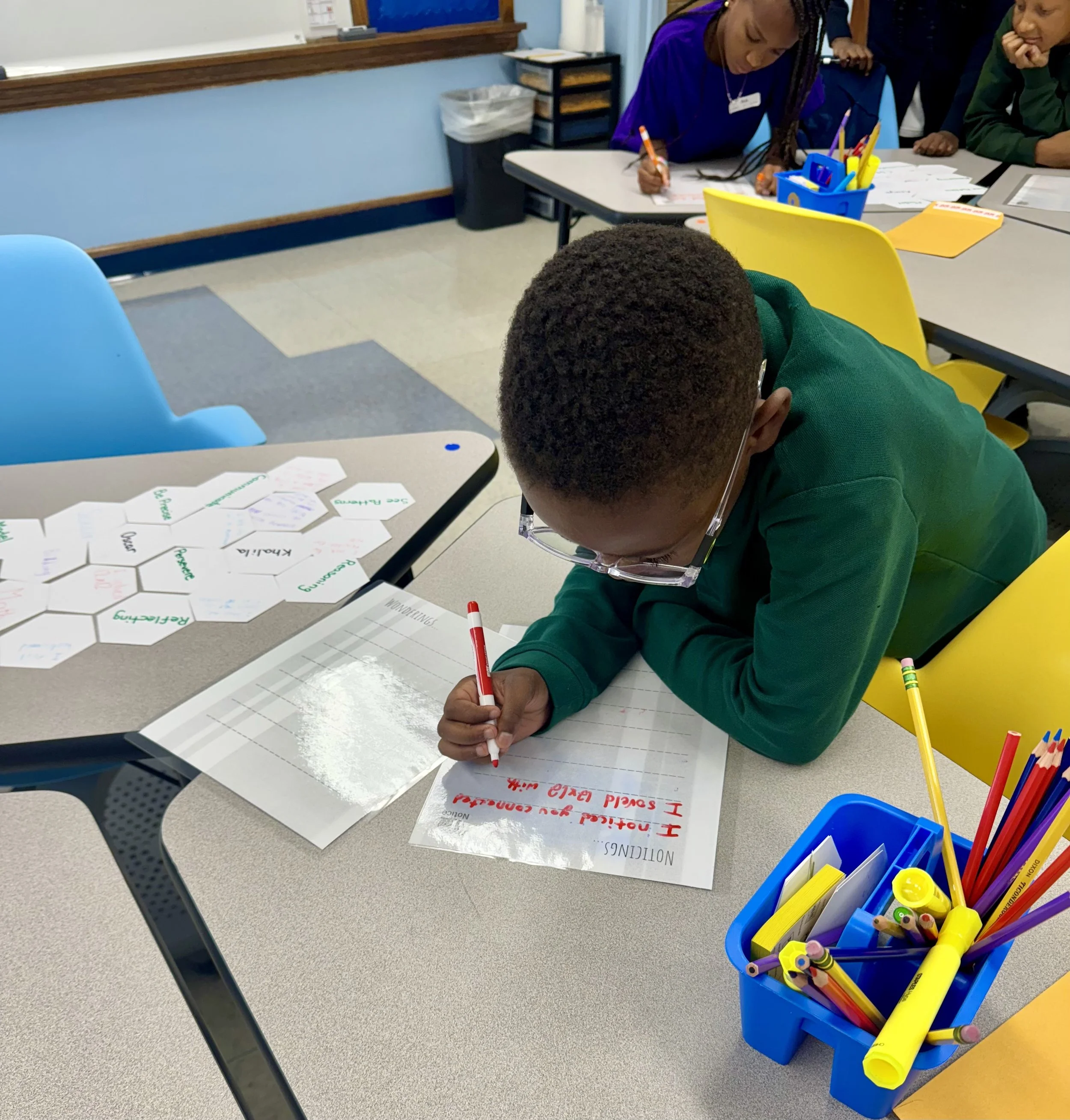
Students’ written reflections, exit prompts, Take a Stand responses, small-group discussions, and whole-class conversations provided insight into how students described themselves as mathematicians and community problem-solvers.
Student Artifacts and Project Work
Design sketches, blueprints, scale drawings, mathematical calculations, survey analyses, planning documents, role-based task sheets, 3D models, proposals, and presentation materials showed how students applied mathematical reasoning to authentic design challenges.
Descriptive and Observational Data
Teacher field notes, reflective journaling, participation patterns, milestone completion, and observed engagement indicators provided additional evidence of how students participated, collaborated, persisted, and revised their thinking.
Teacher-Designed Pre/Post Survey
This teacher-designed survey was administered before and after the unit to document shifts in students’ mathematical identity, engagement, belonging, agency, and views of mathematics as a tool for community problem-solving. The identity section assessed how students saw themselves as mathematical thinkers. The engagement section examined interest, persistence, and willingness to participate in challenging tasks. The agency section focused on whether students believed their mathematical ideas could help them make decisions, solve problems, and contribute to their community. The community connection section assessed how students understood the relationship between mathematics, place, and real-world change.
Analysis Approach
Evidence was analyzed through a reflective and thematic lens consistent with practitioner inquiry. Student work, reflections, survey results, and classroom artifacts were reviewed for recurring patterns related to mathematical identity, engagement, collaboration, persistence, agency, belonging, civic reasoning, and connection to Orange.
Triangulating multiple sources of evidence strengthened the credibility of the findings. Student work showed what students produced. Reflections and Take a Stand responses showed how students understood themselves as mathematical thinkers. Survey data showed shifts in perception across the unit. Presentations showed how students communicated, defended, and revised their ideas for an authentic audience.